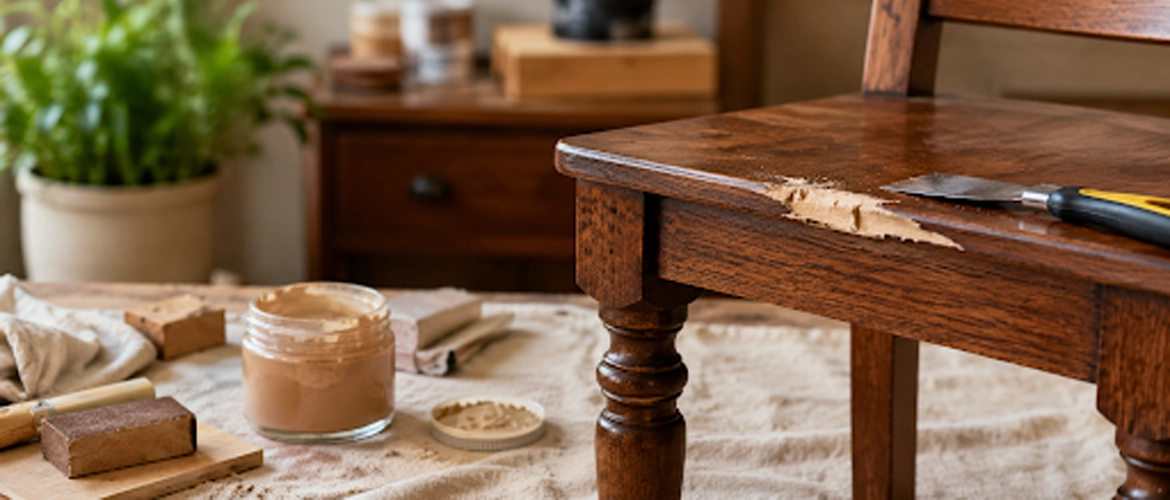
Your favorite wooden table, cabinet, or coffee table doesn't have to stay scratched or damaged forever. Wooden furniture repairs are often much easier—and cheaper—than most people expect. Whether you're dealing with light scratches, water rings, dents, or chipped edges, there are simple DIY fixes that can make your furniture look beautiful again without having to replace it.
In this guide, you'll learn which DIY methods actually work, when household hacks are worth trying, and when it's better to call in a professional. Whether you're refreshing a cherished family piece or keeping everyday furniture looking its best, these practical wooden furniture repairs can help restore your furniture without spending a fortune.
Why Do Wooden Furniture Repairs Matter?
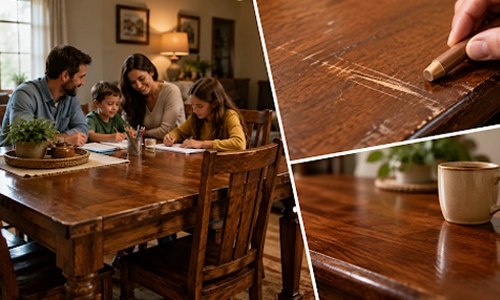
Furniture isn't just furniture.
It's where your family gathers for dinner, where your kids finish homework, or where you enjoy your morning coffee. Small scratches and dents happen in real life—and they don't mean your furniture is ruined.
The good news? Most surface damage can be repaired at home with inexpensive supplies and a little patience.
What Actually Works for Wooden Furniture Repairs?
Depending on how serious the damage is, you have a few incredibly simple options. Here is exactly what you need to do to rescue your wood surfaces without breaking a sweat (or your budget).
1. The Walnut Trick (For Light Surface Scratches)
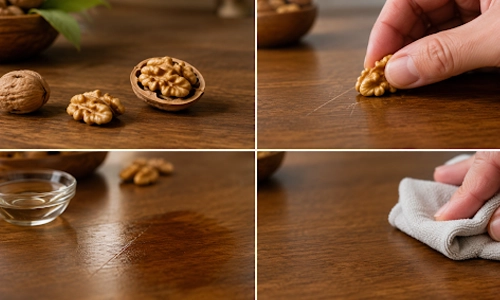
If you have shallow scratches or scuffs, skip the hardware store entirely. Architectural restorers and home care experts frequently recommend natural oils for cosmetic touch-ups because they mimic the wood's original finish.
- Step 1: Grab a raw walnut halves (pecans or Brazil nuts also work).
- Step 2: Rub the nut meat vigorously across the scratch diagonally.
- Step 3: Let the natural oils soak into the wood for 5 minutes.
- Step 4: Buff the area clean with a soft microfiber cloth.
2. The Vinegar and Olive Oil Polish (For Dull Wood & Scuffs)
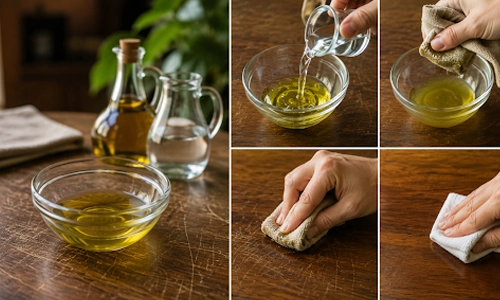
If your wood looks tired and has a web of fine surface scratches, this homemade mixture hydrates and masks imperfections instantly.
- Step 1: Mix ¾ cup of olive oil and ¼ cup of white vinegar in a small bowl.
- Step 2: Dip an old rag or microfiber cloth into the mixture.
- Step 3: Wipe down the entire surface, rubbing firmly into the scratched areas.
- Step 4: Wipe away any excess oil with a clean, dry towel.
3. Wood Furniture Repair Markers (For Deep, Discolored Scratches)
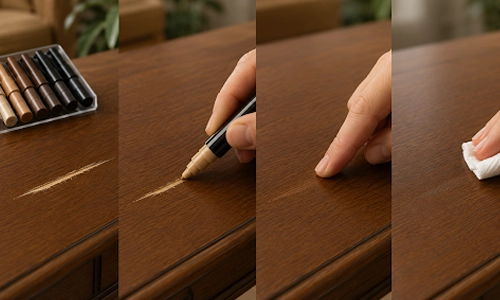
When the scratch has cut past the varnish and exposed raw, pale wood underneath, you need to add color back in.
- Step 1: Buy a cheap pack of blended wood markers (usually under $10 online).
- Step 2: Start with a shade lighter than your furniture—you can always layer to make it darker.
- Step 3: Color directly into the scratch.
- Step 4: Immediately smudge it with your finger or a paper towel so it blends seamlessly with the surrounding wood finish.
How Do I Know If I Can Fix It Myself?
| Damage Type | Best DIY Fix | Time Required | When to Skip DIY |
| Light Scratches | Raw Walnut / Pecan | 2 Minutes | If scratch catches your fingernail. |
| Dark Wood Scuffs | Coffee Paste / Black Tea | 10 Minutes | If the finish is completely stripped. |
| White Water Rings | Mayonnaise | 2-8 Hours | If the stain is black (water reached the wood). |
| Deep Gouges | Wax Fill Sticks (Crayons) | 5 Minutes | If the structural integrity is compromised. |
Frequently Asked Questions
1. What is the easiest way to repair scratches on wooden furniture?
For light scratches, wood touch-up markers or furniture repair crayons are usually the quickest and easiest solution.
2. Can toothpaste remove scratches from wood?
Toothpaste is sometimes suggested online, but furniture restoration experts generally recommend products designed for wood finishes to avoid damaging the surface.
3. Does the walnut trick really work?
It can temporarily reduce the appearance of light scratches because natural oils darken exposed wood, but it isn't a permanent repair.
4. Can I fix water rings myself?
Yes. White water rings often respond to gentle heat and furniture polish. Dark black stains usually indicate deeper moisture damage and may require refinishing.
5. When should I call a professional?
Seek professional restoration for antiques, structural damage, severe cracks, termite damage, or extensive water damage.
A scratch doesn't mean your favorite piece of furniture is ruined. In many cases, wooden furniture repairs are surprisingly simple and affordable when you know which method matches the damage.
Start by identifying the problem, use the least aggressive repair method first, and work patiently. Whether it's a tiny scuff or a loose dining chair, a few DIY techniques can help your furniture look beautiful again—without the cost of replacing it.