If cleaning your bathroom feels like a chore you have to repeat before you've even had time to enjoy the result, you may be making a few bathroom cleaning mistakes without realizing it.
You don't need more cleaning products or a three-hour deep-cleaning routine. A few simple changes can help you clean your bathroom more efficiently, protect your surfaces, and avoid doing the same job twice.
Why Does My Bathroom Get Dirty Again So Quickly?
A bathroom deals with water, soap residue, hair, dust, and plenty of daily hand contact. So some mess is unavoidable.
What you can avoid is cleaning in a way that spreads grime, leaves residue behind, or makes you repeat the same task later. The biggest problems usually come down to four habits.
1. Using the Same Cloth for Every Bathroom Surface
It is tempting to grab one microfiber cloth and work your way around the entire bathroom. It feels faster, especially when you're trying to finish cleaning between work, family responsibilities, and everything else on your list.
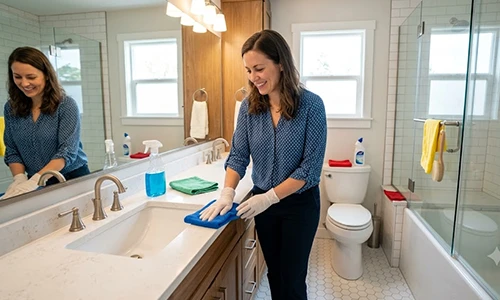
But that shortcut can work against you. A cloth used around the toilet shouldn't then be used on your sink or countertop. You don't want to move grime from one surface to another. Regularly clean high-touch surfaces and use cleaning products appropriate for the specific surface.
A simpler way to clean
Keep separate cloths for different areas:
- Toilet: Use a dedicated cloth or disposable cleaning material.
- Sink and counter: Use a separate microfiber cloth.
- Mirror: Keep another clean, lint-free cloth available.
- Shower and tiles: Use a cloth or scrubber appropriate for the surface.
You don't need a huge collection of cleaning supplies. Even a small color-coded system can make the routine easier.
2. Cleaning the Bathroom in the Wrong Order
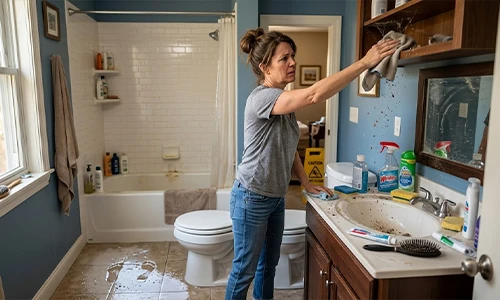
If you wipe dusty shelves or clean the sink after you've already mopped, debris and dirty water can end up back on surfaces you've just finished. Instead, work from higher surfaces to lower ones. A practical order is:
- Remove items from counters and the shower area.
- Dust or wipe higher surfaces.
- Clean the mirror.
- Clean the sink and countertop.
- Clean the toilet.
- Clean the shower and tub.
- Sweep or vacuum the floor.
- Mop the bathroom floor last.
The goal is simply to avoid undoing the work you've already done.
3. Using Too Much Cleaner
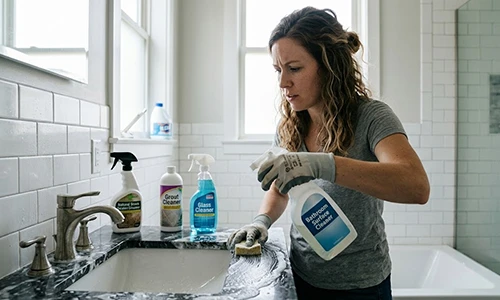
More cleaner doesn't automatically mean a cleaner bathroom. In fact, using too much product can leave behind residue that makes some surfaces feel sticky or dull. It can also make rinsing harder and waste your cleaning products.
Follow product-label instructions and choose a cleaner suitable for the surface you're cleaning. This is especially important when you're cleaning different bathroom materials.
Don't assume the same product belongs everywhere. For example, natural stone surfaces can require different care from ceramic or porcelain tile. When you're unsure, check the manufacturer's cleaning instructions rather than experimenting.
Never mix cleaning products. Beware of mixing bleach or disinfectants with other cleaners because dangerous vapors can result. Good ventilation is also important when using these products indoors.
4. Mopping the Floor Before Removing Hair and Loose Dirt
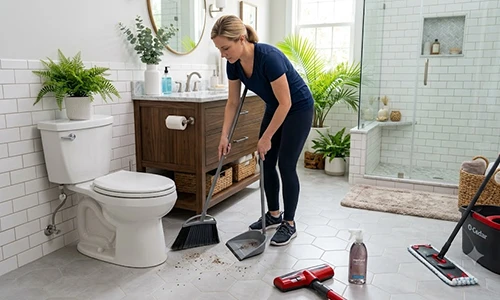
This is one of those mistakes that can make a five-minute job feel twice as long. Hair, dust, and small bits of debris collect surprisingly quickly around toilets, cabinets, corners, and behind doors.
If you immediately mop over them, you can end up pushing wet hair and dirt around the floor instead of actually removing them.
How to mop bathroom floor properly
Try this simple sequence:
- Pick up anything lying on the floor.
- Sweep or vacuum loose hair and dust.
- Pay attention to corners and around the toilet base.
- Use a suitable floor cleaner according to its label.
- Mop with a clean mop head.
- Allow the floor to dry properly.
If your bathroom floor is made from a particular material, follow the manufacturer's care instructions before choosing a cleaner. And don't forget the mop itself. A dirty mop can put grime right back onto the floor you've just cleaned.
What About the Bathroom Sink and Tiles?
Two areas often need a little extra attention because they collect residue quickly: the sink and shower tiles.
How to Clean the Bathroom Sink Without Overdoing It
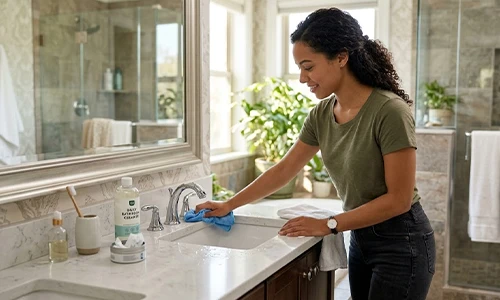
Start by removing toiletries, hair, and visible debris. Then:
- Rinse away loose residue.
- Apply a suitable bathroom cleaner.
- Wipe or scrub according to the product instructions.
- Rinse if required.
- Dry the surface with a clean cloth.
Don't automatically reach for the strongest product. Your sink material matters, so check the manufacturer's care instructions when you're unsure.
How to Clean Bathroom Tiles Without Leaving Residue
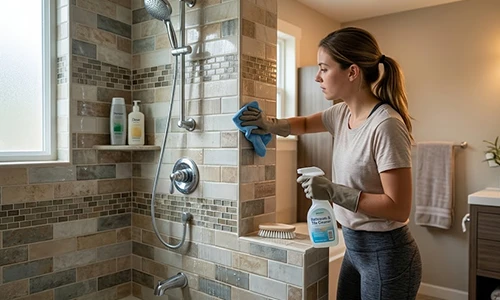
For everyday cleaning, remove loose dirt first and then use a product suitable for your tile type. Pay attention to:
- Soap buildup around the shower
- Corners where moisture collects
- Grout lines
- Areas behind shampoo bottles
- The lower sections of the shower wall
If you're dealing with natural stone, be particularly careful about using acidic homemade cleaners. Some acids can damage certain stone surfaces.
A 15-Minute Bathroom Reset for Busy Days
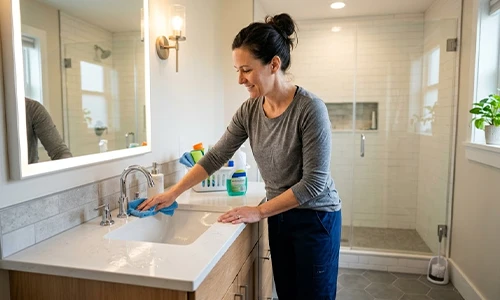
You don't always have the time or energy for a deep clean. When your bathroom needs a quick reset, focus on the areas that make the biggest visual difference.
Start with This Order
- Minutes 1–3: Put away toiletries and remove visible clutter.
- Minutes 4–6: Wipe the sink, counter, and faucet.
- Minutes 7–9: Clean the toilet and its high-touch areas.
- Minutes 10–12: Wipe the mirror and shower's most noticeable surfaces.
- Minutes 13–15: Sweep or vacuum, then mop if needed.
For a regular maintenance routine, you can also wipe frequently touched areas such as faucet handles, door handles, and light switches. Save detailed grout cleaning, exhaust-fan cleaning, and other deep-cleaning jobs for a time when you actually have the energy for them.
FAQ
How often should I clean my bathroom?
Clean surfaces when they are visibly dirty and regularly clean frequently touched areas. How often you need to clean depends on how many people use the bathroom and how quickly it becomes dirty.
Should I clean the floor before the sink?
No. In most routines, it makes more sense to clean higher surfaces first and leave the floor until the end. That way, dust and debris that fall during cleaning don't land on a freshly mopped floor.
Can I use the same cleaner on all bathroom surfaces?
Not necessarily. Check the product label and the manufacturer's care instructions for each surface. Different materials can have different cleaning requirements.
Is it safe to mix bathroom cleaning products?
No. Never mix cleaning products unless the manufacturer specifically instructs you to do so. Mixing certain products can create dangerous fumes.
How can I make bathroom cleaning easier when I'm short on time?
Focus first on visible clutter, the sink, toilet, high-touch surfaces, and floor. A short maintenance routine is easier to keep up with than waiting until the bathroom needs a major deep clean.
Bathroom cleaning doesn't have to take over your weekend. If you're already short on time, the answer isn't necessarily to clean faster. It's to stop creating extra work for yourself.
Use separate cloths, clean from top to bottom, follow product directions, and leave the floor until last. Once those habits become automatic, cleaning the bathroom can feel much more manageable. And if you discover a small trick that genuinely saves you time, keep it. The best cleaning routine is the one that works with your life, not against it.