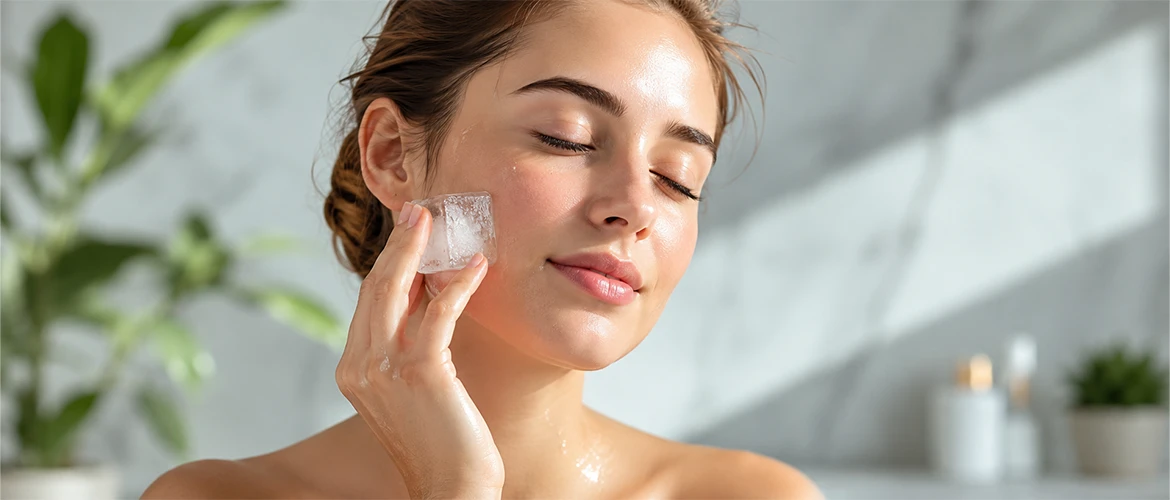
Your face can look exhausted even when you aren't. A late night, salty dinner, long workday, or simply waking up can leave your face looking puffy. An ice cube on your face may offer a quick way to temporarily reduce that swelling and make your skin look fresher.
But before you grab a cube from the freezer, there's something worth knowing. Facial icing can give your skin a temporary cooling and de-puffing effect, but it isn't a miracle treatment for acne, wrinkles, or enlarged pores. That makes it less of a "skin transformation" and more of a quick beauty pick-me-up which, honestly, may be all you need on a busy morning.
The Simple Science Behind Skin Icing
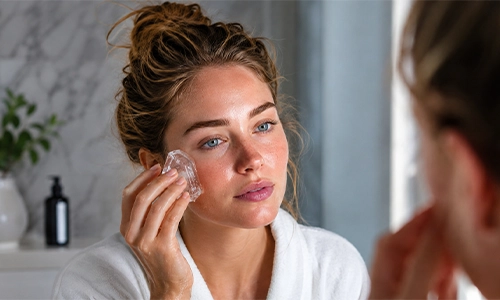
Skin icing involves applying something cold to your face for a short period. Cold temperatures temporarily constrict blood vessels near the skin's surface. That can reduce the appearance of mild swelling and puffiness. Facial icing is a temporary way to reduce facial swelling rather than a long-term solution for common skin concerns. Once your skin returns to its normal temperature, the visible effect can fade.
The Visible Benefits of an Ice Cube on Face
Facial icing isn't going to replace your cleanser, moisturizer or sunscreen. Still, there are a few reasons this simple trick has stayed popular.
A More Sculpted Look Around the Cheeks
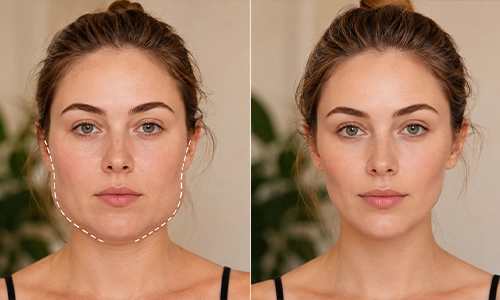
When facial puffiness decreases, your natural contours can become more noticeable. Your cheekbones may look slightly sharper and your jawline may appear more defined. The ice isn't actually sculpting your face or changing your bone structure.
It's simply reducing some temporary swelling that may be hiding your natural definition. Think de-puffed, not permanently sculpted.
A Calmer Appearance for Angry Breakouts
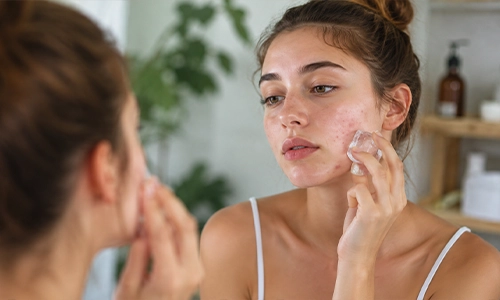
Cold can temporarily reduce swelling and discomfort around an inflamed pimple. That can be particularly useful when you have one painful breakout that looks much bigger than it feels like it should be. Ice may help reduce inflammation and discomfort associated with inflammatory acne.
However, ice for acne isn't an acne treatment. It won't unclog pores, eliminate acne-causing bacteria or prevent future breakouts. If acne is a recurring concern, stick with an evidence-based skincare routine or speak with a dermatologist.
Less Noticeable Under-Eye Puffiness
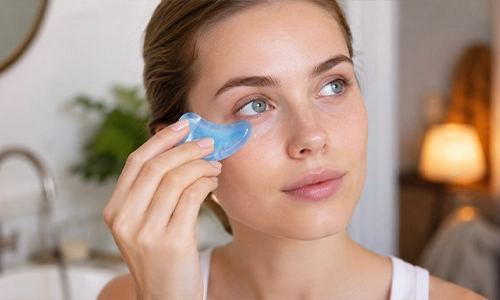
A cold application may temporarily reduce swelling around the eyes. That can make tired-looking eyes appear a little more refreshed, particularly first thing in the morning.
But facial icing can't remove structural under-eye bags or permanently change dark circles caused by genetics, aging or pigmentation. The skin around your eyes is delicate, so this is one area where less pressure is definitely better.
A Temporary Reduction in Facial Puffiness
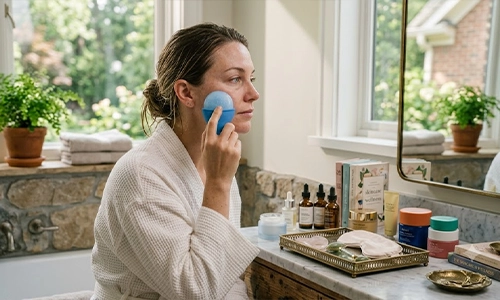
This is probably the most practical reason to try facial icing. If your cheeks, jawline or entire face look swollen after waking up, cold may temporarily reduce the appearance of that puffiness. It won't address the underlying cause of recurring swelling, though.
The Pore-Shrinking Claim Needs a Reality Check
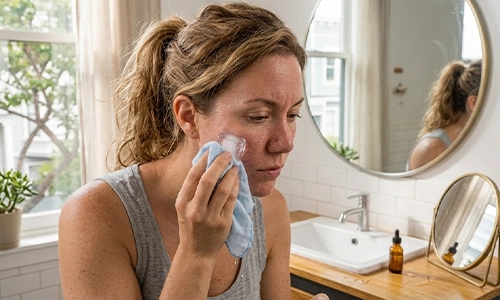
You've probably seen the claim that ice "closes" or "shrinks" pores. Not quite. Cold can temporarily constrict blood vessels and make skin appear tighter, which may make pores look less noticeable for a little while. But an ice cube can't permanently shrink your pores.
The Best Time to Use an Ice Cube on Face
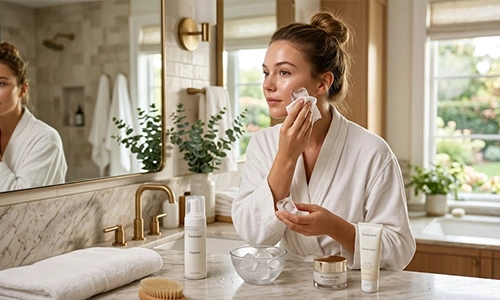
Use facial icing after cleansing, not before. Starting with clean skin prevents you from spreading makeup, sunscreen, sweat or accumulated oil around your face while applying the cold treatment.
A simple morning routine can look like this:
Cleanser → facial icing → moisturizer → sunscreen
The Safest Way to Apply Ice to Your Face
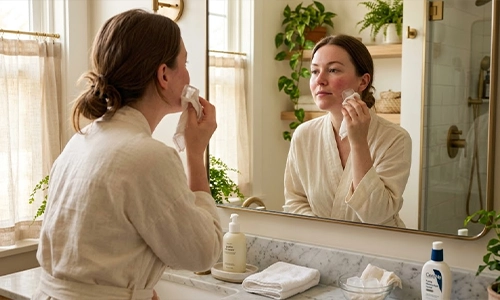
The biggest facial-icing mistake is placing a frozen cube directly against one area of your skin and leaving it there. Instead:
- Wash your face with a gentle cleanser.
- Pat your skin dry.
- Wrap an ice cube in a thin, clean cloth.
- Gently glide it across your skin.
- Keep the ice moving rather than holding it in one place.
- Spend extra time on areas that look puffy.
- Be extremely gentle around the eyes.
- Stop if your skin becomes painful, numb or excessively red.
- Apply moisturizer afterward if your skin feels dry.
Note: Keep ice moving and avoid prolonged contact because extreme cold can damage the skin.
The Best Areas for Facial Icing
| Area | Why people ice it | What to expect |
| Cheeks | Facial puffiness | A temporarily less swollen appearance |
| Jawline | Morning swelling | Slightly more visible definition |
| Forehead | Cooling sensation | Refreshed feeling |
| Chin | Local puffiness | Temporary reduction in swelling |
| Nose | Puffiness | A cooler, less swollen appearance |
| Under-eyes | Morning puffiness | Temporary reduction in swelling |
Around the eyes, use a particularly light touch. Never press a frozen cube directly onto the delicate skin.
Plain Ice Isn’t Your Only Option

Facial-icing trends have moved far beyond ordinary water. You may see people freezing:
- Green tea
- Aloe vera
- Coffee
- Cucumber water
- Other DIY skincare ingredients
Some of these ingredients have properties that may be useful in skincare, but that doesn't mean freezing them creates a proven treatment.
For example, green tea contains compounds with antioxidant properties, while aloe vera has been studied for certain skin applications. However, evidence for frozen green tea cubes or frozen aloe specifically as facial treatments remains limited. For a first attempt, plain clean water is perfectly fine.
How Often Facial Icing Belongs in Your Routine
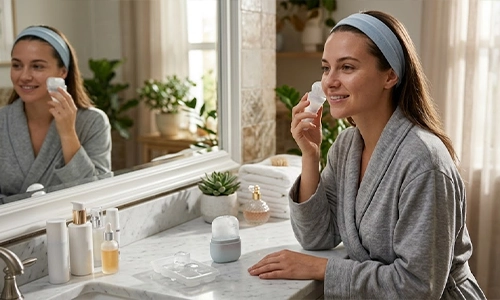
More isn't necessarily better. Facial icing no more than once a day. There also isn't strong evidence establishing a perfect long-term facial-icing schedule.
If you enjoy the cooling effect and your skin tolerates it, occasional or once-daily use is reasonable. But there's no prize for icing your face five times a day.
The Risks Hiding Behind the Beauty Trend

Ice may be inexpensive, but your skin isn't disposable. Applying extreme cold directly to the skin for too long can cause:
- Irritation
- Redness
- Excessive dryness
- Numbness
- Ice burns
- Nerve damage
- Frostbite
If the sensation changes from "refreshingly cold" to "painfully cold," stop. Your skin isn't supposed to hurt for a beauty treatment to work.
Skin Conditions That Make Facial Icing a Bad Idea
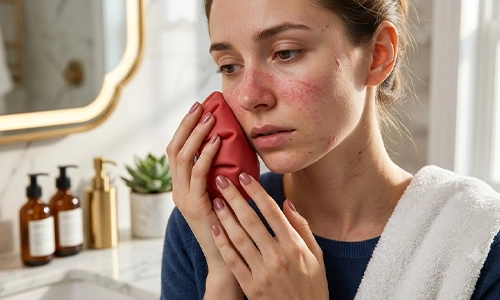
Some people should skip facial icing altogether or get professional advice first. Be cautious if you have:
- Very sensitive or thin skin
- Visible broken capillaries
- Reduced sensation in the skin
- Raynaud's syndrome or another cold-sensitive condition
- Open wounds
- Burns
- Significant skin irritation
- Skin recovering from a cosmetic procedure
If you've recently had a peel, laser treatment, injection or cosmetic procedure, follow your clinician's aftercare instructions instead of experimenting with ice.
Side Effects That Mean You Should Stop

A little temporary redness may happen. Pain and burning are different. Stop facial icing if you notice:
- Burning
- Significant pain
- Persistent numbness
- Blistering
- Pale or unusual skin color
- Redness that doesn't settle
If you suspect a cold injury, don't continue icing the area.
Frequently Asked Questions
Can ice remove pimples?
No. Ice may temporarily reduce swelling and discomfort around an inflamed pimple, but it isn't a treatment for acne.
Can ice permanently shrink pores?
No. Cold may make pores look temporarily less noticeable, but it doesn't permanently change their size.
Can facial icing reduce eye bags?
It may temporarily reduce puffiness around the eyes, but it won't remove structural or genetic under-eye bags.
Should I ice before or after washing my face?
After cleansing is the better choice. Start with clean skin before applying anything cold.
How often can I ice my face?
No more than once a day. If your skin becomes irritated, stop rather than increasing the frequency.
An ice cube isn't going to replace your skincare routine and it doesn't need to. Used carefully, it can be a simple, inexpensive way to temporarily tackle facial puffiness, give your skin a refreshed appearance and soothe the look of an angry breakout.
Just don't confuse a quick cosmetic effect with a permanent skincare result. Your freezer can provide the occasional beauty boost. Your cleanser, moisturizer, sunscreen and proven treatments still do the heavy lifting.