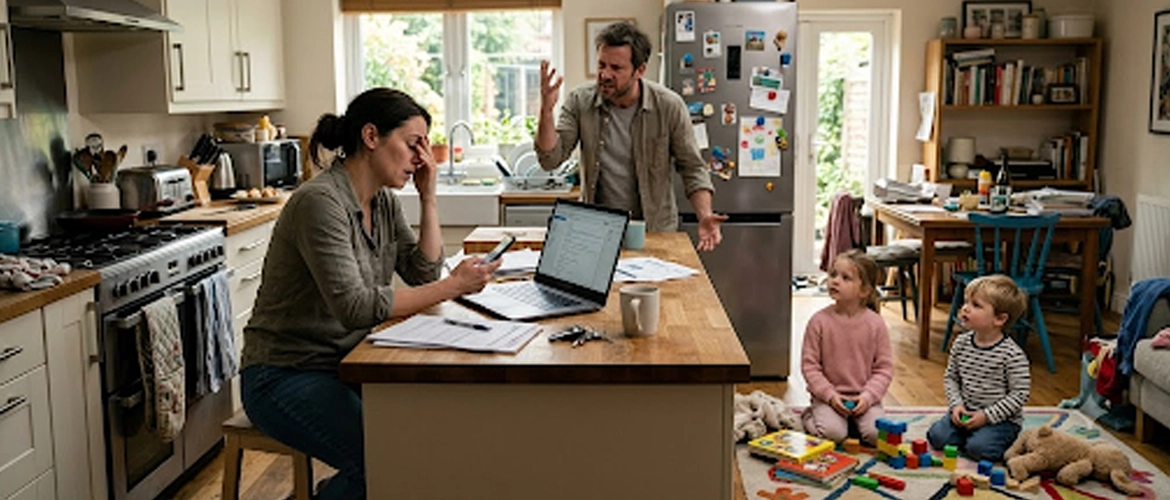
Running a household while managing a career means your patience is constantly being tested, and your energy reserves are often running on empty. While perfect parenting doesn’t exist, setting clear emotional boundaries is essential—starting with the specific things you should avoid in front of kids to protect their sense of security.
Last Saturday, my patience was pushed to the absolute limit. After a brutal afternoon of back-to-back work calls, my husband walked into the kitchen and made a harmless remark about dinner that instantly irritated me. A sharp, petty argument was right on the tip of my tongue, and the kids were sitting right there at the counter, watching our faces change.
Instead of letting that adult tension spill over into a full-blown fight, I forced myself to pivot the entire room's energy. I closed my laptop, grabbed a big blanket, and told the kids, "Alright, unexpected plan change—we are putting on a movie right now." We dimmed the lights, piled onto the couch, and put on an old animated favorite. My husband and I sat on opposite ends of the sofa, but the room immediately quieted down. Having everyone focus on watching a movie together at home gave us a built-in, peaceful boundary. It allowed the heavy work stress to dissipate, kept us from arguing, and reminded me that sometimes the best way to handle a tense moment is to simply pause and change the channel.
What Are the Core Things You Should Avoid in Front of Kids?
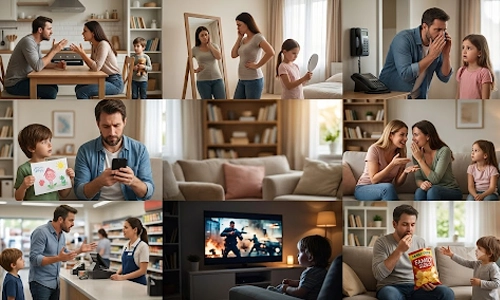
When you are stretched thin, tiny slip-ups are bound to happen. However, child development experts at the Child Mind Institute emphasize that consistent exposure to certain adult behaviors can deeply impact a child's internal sense of safety.
Here is what we should actively try to keep out of their direct line of sight:
- Intense, Unresolved Arguments: Kids can handle seeing healthy disagreements, but screaming, insults, or icy silence can cause their cortisol levels to spike.
- Body Shaming and Self-Criticism: Commenting negatively on your appearance in front of the mirror inadvertently teaches them to judge their own bodies.
- Weaponizing White Lies: Asking a child to lie for you (like saying, "Tell them I'm not home") places an unfair emotional burden on their shoulders.
- The "Phubbing" Habit: Checking out completely onto your phone while they are trying to talk to you signals that the digital world takes priority over them.
- Gossiping or Mocking People Behind Their Backs: It is easy to casually poke fun at a relative's outfit or a neighbor's behavior, but be careful with your tongue. Kids assume this behavior is perfectly normal and are highly likely to repeat exactly what you said right to the person you were talking about!
- Disrespectful or Rude Language: If you want your children to be courteous, they need to hear that from you first. Talk to others exactly the way you want your children to talk to you.
- Watching Mature Content or Vulgarity on TV: Kids have highly sensitive minds that aren't ready to process adult situations, violence, or vulgarity. Save the adult entertainment for behind closed doors after bedtime.
- Binging on Junk Food: While junk food is fine in moderation, kids need to understand it isn't a daily dietary staple. Avoid mindlessly eating junk in front of them unless you want to deal with immediate tantrums when they demand the exact same meal you are eating.
How Do You Know If Your Reactions Are Hurting Them?

Children don’t always have the vocabulary to tell us when they are feeling overwhelmed by adult behavior; instead, they show us through their actions.
Signs of Sensory and Emotional Overwhelm
- Regressive Behavior: Sudden instances of thumb-sucking, bedwetting, or intense clinginess that they had previously outgrown.
- Hyper-Vigilance: Becoming a "people-pleaser" or trying to act like a mini-adult to keep the peace around the house.
- Physical Complaints: Frequent, unexplained stomach aches or headaches right before school or during tense family moments.
What Actually Works for Calming Down in the Moment?

When the domestic pressure cooker is about to blow, you need quick, practical strategies to shift gears before saying or doing something you will regret later.
| Strategy Type | How to Execute It | Why It Works |
| The Creative Pivot | Grab materials for a diy bird feeder or a quick homemade bird feeder. | Engages their hands, changes the physical environment, and calms your nervous system. |
| The Verbal Pause | State clearly: "Mommy is feeling frustrated right now, so I am taking a quiet minute." | Models healthy emotional regulation rather than hiding standard human emotions. |
| The Scenery Shift | Drop the current chore, grab a blanket, and start watching a movie together at home. | Instantly captures the kids' attention, darkens the environment to lower sensory input, and forces an adult timeout. |
Frequently Asked Questions
Is it always harmful to argue in front of your children?
No. The American Psychological Association (APA) states that seeing parents resolve mild disagreements calmly and constructively actually teaches kids healthy conflict-resolution skills.
What should I do if I accidentally lose my temper?
Repair the bond immediately. Apologize directly without making excuses: "I lost my temper, and that wasn't your fault. I am working on staying calm."
How do I stop discussing stressful financial issues around them?
Reframe the conversation to remove fear. Instead of saying, "We can't afford that, we're broke," try: "We're choosing to save our money for other family goals right now."
Is it okay to vent about my boss or job in front of them?
It's best to save work venting for when they are out of earshot. Hearing constant complaints can make kids anxious about the adult world and your family's stability.
What should I do if my partner does something on this list?
Avoid calling them out in front of the kids, which compounds the tension. Discuss it privately later using "I" statements, like: "I feel anxious when we argue in front of the children."
How can I handle my digital screen time better around my kids?
Set strict "phone-free zones," such as during dinner or the first hour after work. This helps you stay fully present and cuts down on accidental digital neglect.
Give Yourself Grace
At the end of the day, your kids don't need a robot—they need a real, loving human. Protecting them from adult stressors isn't about being perfect 100% of the time; it’s about intentionally creating a home environment where they feel safe, heard, and protected.
The next time you feel your fuse getting short, permit yourself to pause, change the scenery, and grab a creative distraction. You are doing a fantastic job, and your kids see the love you put into their lives every single day. Let's take it one peaceful step at a time!