
Your closet is full, but somehow you still struggle to find something to wear. And after a long day of work, family responsibilities, and everything else on your plate, spending an entire afternoon sorting clothes probably sounds exhausting. These rules for cleaning out closet clutter will help you sort what you own, free up space, and make your daily dressing routine easier in just 30 minutes.
Rules for Cleaning Out Closet Clutter Without the Stress
The secret to a quick closet cleanout is to make fewer decisions, avoid unnecessary distractions, and work against a timer. You aren't trying to create a picture-perfect wardrobe. You're making your existing closet work better for your everyday life.
Minutes 1–3: Get Your Supplies Ready
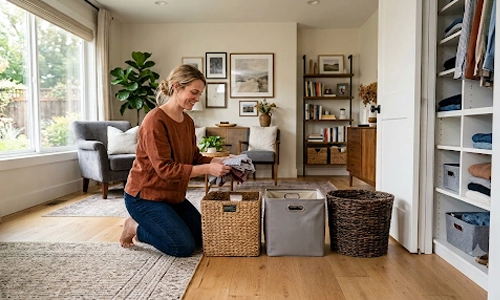
Before touching your clothes, gather three bags or containers and set a timer for 30 minutes. Label them:
- Keep: Clothes you wear, love, and feel comfortable in.
- Donate or sell: Wearable items you no longer need.
- Repair or decide later: Pieces that need mending or that you're genuinely unsure about.
Keep a laundry basket nearby for clothes that belong somewhere else. This small preparation step saves you from wandering around the house halfway through your closet clean up.
Minutes 4–10: Remove the Easiest Clutter First
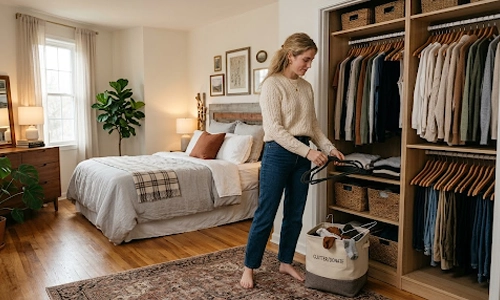
Start with the items that require almost no thought. You don't need to pull every garment out and cover your bed with clothes. Look for:
- Clothes that are damaged beyond repair.
- Empty hangers taking up space.
- Items you haven't worn because they no longer suit your lifestyle.
- Clothes that belong in another room.
- Duplicate basics you rarely reach for.
Move quickly, but don't force yourself to make difficult decisions about sentimental pieces. You can tackle those another day.
Minutes 11–20: Decide What Deserves Its Space

For each item, ask yourself five quick questions:
- Have I worn this in the past year or during its appropriate season?
- Does it fit comfortably right now?
- Does it suit my current lifestyle?
- Can I pair it with other clothes I already own?
- Would I choose to wear it again if I saw it in my closet today?
If most answers are no, consider donating or selling the item if it's in good condition. Of course, not every unworn item needs to go. Special-occasion outfits, seasonal clothing, and sentimental pieces may deserve a place in your wardrobe. The goal is to remove the things that no longer serve you, not to follow an arbitrary rule about owning fewer clothes.
Try the hanger trick: Turn the hangers of your everyday clothes in the opposite direction. After wearing and washing an item, return it with the hanger facing the usual way. Over the coming months, you'll get a clearer picture of what you actually wear. This is a tracking method, not a deadline for getting rid of clothes.
Minutes 21–25: Put Everything Back With a Plan

Now that you've made your decisions, organize the clothes you're keeping.
- Group workwear, casual outfits, and occasion wear together.
- Keep frequently worn items at eye level or within easy reach.
- Fold sweaters and other suitable garments on shelves.
- Store seasonal items separately if space is limited.
- Keep everyday accessories in one accessible place.
You don't need a color-coded wardrobe to make your closet easier to use. Organize it around how you get dressed, especially on busy mornings. If you have a small closet, use matching hangers only if you already own them or genuinely need them. A simple, consistent arrangement can be useful without adding another expense.
Minutes 26–30: Finish the Job Properly

Don't let the final five minutes disappear into rearranging the same clothes. Use this time to:
- Remove the donation bag from your closet.
- Put laundry and misplaced items where they belong.
- Wipe an accessible shelf or vacuum the closet floor if time allows.
- Make a short list of genuine wardrobe gaps.
- Schedule a time to drop off donations or list items for resale.
Avoid leaving bags beside your closet for weeks. If you're donating clothes, check the receiving organization's requirements and arrange a realistic drop-off time. At the end of 30 minutes, your closet may not look like a professional organizer styled it. That's fine. If it's easier to navigate and contains fewer unwanted items, you've made meaningful progress.
How to Clean Your Closet When You Only Have 10 Minutes

Some days, even 30 minutes is too much. If you're wondering how to clean your closet in 10 minutes, focus on a small, visible improvement instead of attempting a complete declutter. Try this quick routine:
- Minutes 1–2: Pick up clothes from the floor and return misplaced items.
- Minutes 3–5: Remove obvious clutter, such as empty hangers and damaged clothing.
- Minutes 6–8: Straighten one shelf or organize one section of hanging clothes.
- Minutes 9–10: Put items away and prepare a small donation bag if needed.
Choose one section and finish it before moving on. You can repeat this routine throughout the week until the entire closet feels more manageable. A 10-minute reset won't replace a full cleanout, but it can help you build a sustainable habit without sacrificing your evening.
What Should You Keep, Donate, or Repair?
When you're unsure about an item, use this simple guide rather than spending several minutes debating every piece.
| Clothing situation | What to do |
| Fits well and gets regular wear | Keep it |
| Good condition but no longer suits your style | Donate or sell |
| Minor damage that you can realistically fix | Set aside for repair |
| Damaged beyond repair | Dispose of it responsibly |
| Seasonal or special-occasion clothing | Store appropriately |
| Sentimental item you rarely wear | Keep selectively or photograph it before letting go |
You don't have to get rid of everything you haven't worn recently. Your wardrobe should reflect your real life, including the occasions and seasons that matter to you.
Simple Ways to Keep Your Closet Tidy After the Cleanout

The easiest closet to maintain is one that doesn't require a major organizing session every weekend. Try these small habits:
- Reset for two minutes each evening: Put stray clothes and accessories back in place.
- Use a one-in, one-out guideline when practical: Before adding another similar item, consider whether something you already own can fill the same role.
- Keep a donation bag accessible: Add unwanted, wearable pieces when you come across them.
- Avoid buying organizers before measuring your space: Check whether the items you own can solve the problem first.
- Review your wardrobe when seasons change: Move seasonal pieces and notice what you actually used.
If your schedule is unpredictable, choose the habits that feel easiest. Consistency matters more than maintaining a perfect closet every day.
Frequently Asked Questions
How often should I clean out my closet?
Review your wardrobe every few months or when your needs change. A short weekly reset can help prevent clutter from building up.
What is the fastest way to declutter a closet?
Set a timer, prepare keep and donate bags, and remove obvious clutter first. Avoid trying on clothes or reorganizing every shelf.
Can I really clean my closet in 30 minutes?
Yes, you can make noticeable progress in 30 minutes, particularly if you focus on one clothing closet and avoid major rearrangements. A very full closet may need several sessions.
What should I do with clothes I might wear again?
Keep seasonal, special-occasion, or genuinely useful items. If you're uncertain about everyday pieces, place them in a dated box and review them later rather than making a rushed decision.
How do I stop my closet from getting cluttered again?
Put clothes away regularly, avoid unnecessary duplicate purchases, and remove items you no longer need as you notice them. Short resets are easier to maintain than occasional major cleanouts.
A closet cleanout doesn't have to become a weekend-long project. With a timer, a few simple decisions, and a plan for the clothes you no longer wear, you can make your wardrobe easier to navigate in 30 minutes.
Start with the easiest clutter, keep the clothes that work for your life, and let go of what no longer serves you. You can always tackle another section later. Your goal isn't a perfect wardrobe. It's opening your closet tomorrow morning and finding something to wear without the unnecessary stress.