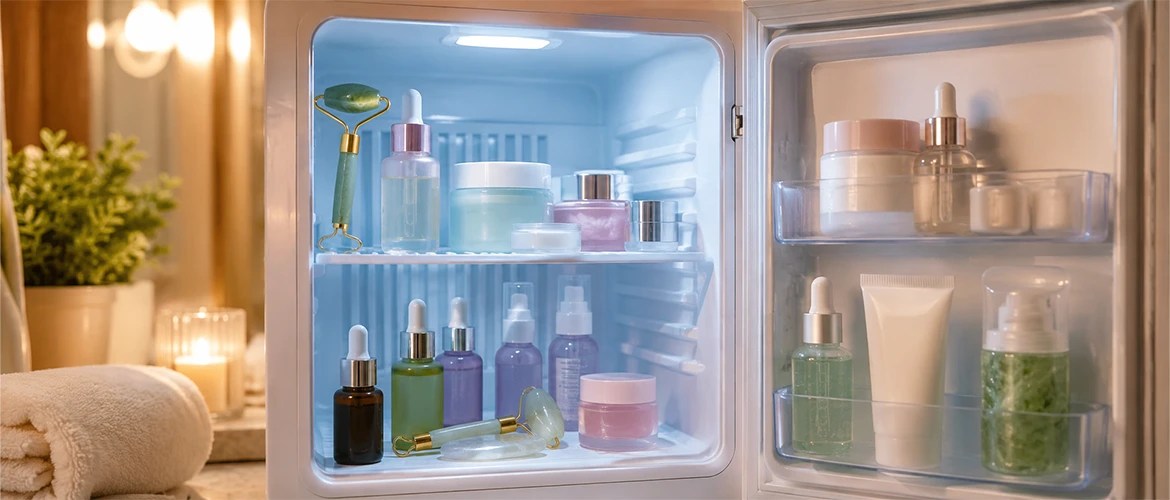
Your bathroom counter is overflowing, your morning beauty routine feels like a race against the clock, and now TikTok is telling you that your moisturizer needs its own tiny fridge.
Let's cut through the internet noise: you do not need to chill your entire vanity, but knowing what skin care products should be refrigerated can actually save your hard-earned cash, boost product efficiency, and give your tired morning skin a serious wake-up call.
What Skin Care Products Should Be Refrigerated?
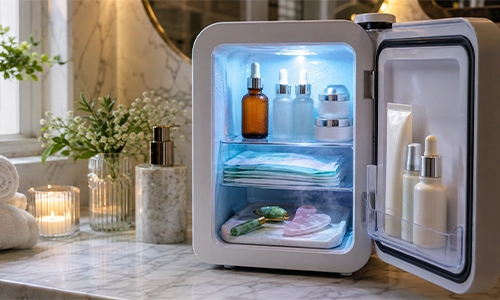
While cold temperatures do not magically alter a product's chemical DNA, dermatologists at the American Academy of Dermatology (AAD) note that chilling specific active formulas can dramatically extend their shelf life and increase their soothing benefits. Here is exactly what belongs on ice:
- Vitamin C Serums: Highly unstable and prone to oxidation (turning brown and useless) when exposed to light and warm air. Keeping it cold slows this process down to a crawl.
- Water-Based Sheet Masks: Pop these in the fridge an hour before using. The cold constricts blood vessels, offering an instant de-puffing effect for tired under-eyes.
- Prescription Acne Gels: Formulations containing clindamycin or benzoyl peroxide often require refrigeration to maintain chemical stability. Always check the pharmacy label!
- Retinol & Retinoids: Heat kills retinol efficacy fast. If you buy backup bottles during a big sale, store the extras in the fridge until you open them.
- Facial Rollers & Gua Sha Stones: While not a product, storing your jade or quartz tools in the cold amplifies lymphatic drainage when you roll out your morning puffiness.
What Should Absolutely Stay on Your Vanity?
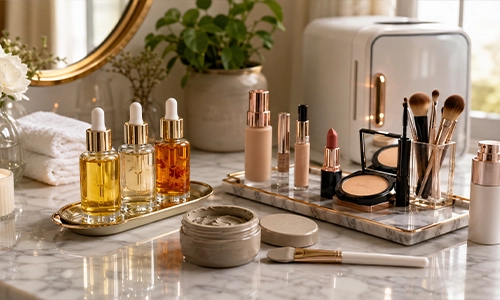
Dropping the wrong items into cold storage can alter their texture or completely ruin the formula. According to cosmetic formulation guidelines from the Cleveland Clinic, oil-based and wax-rich items should never be chilled. Keep these far away from the cold:
- Facial Oils: Cold temps cause oils (like jojoba, argan, or rosehip) to solidify and separate into a cloudy, unusable mess.
- Clay Masks: The chill will completely dry out the water content in the clay, turning your smooth mud mask into a hard, cracked brick.
- Traditional Makeup: Liquid foundations, concealers, and lipsticks will split, sweat, or change consistency if they are constantly moving between a cold fridge and room temperature.
- Silicone-Based Primers: The cold can make silicone stiff, meaning it won't glide over your pores smoothly.
The Cheat Sheet: Cool vs. Countertop
| Product Type | Where It Belongs | The "Why" Behind It |
| Vitamin C Serums | Fridge | Stops oxidation and turning orange |
| Face Oils & Balms | Vanity | Cold causes waxes & oils to split |
| Sheet Masks & Rollers | Fridge | Maximum de-puffing & soothing |
| Clay & Mud Masks | Vanity | Fridge completely dries them out |
| Prescription Topicals | Fridge | Preserves active chemical stability |
Do You Actually Need a Dedicated Mini Beauty Fridge?
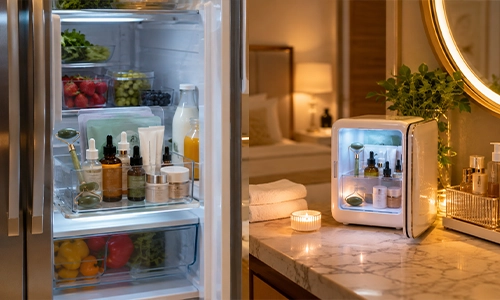
You absolutely do not need to buy a separate mini skincare fridge. A designated plastic bin tucked safely into your regular kitchen refrigerator works just as well to keep your skincare separated from yesterday's leftovers.
However, if you hate trekking down to the kitchen during your nighttime wind-down routine, a tiny countertop vanity fridge is a fun, low-wattage luxury—just make sure it stays around 45–50°F (7–10°C). Anything colder than that risks freezing your liquid formulas.
FAQs
Can I store my everyday moisturizer in the fridge?
Yes! If it is a water- or gel-based moisturizer, storing it in the fridge makes it incredibly refreshing, especially if you deal with rosacea, redness, or skin irritation.
How can I tell if a product has gone bad from the cold?
Look closely at the texture. If you notice fluid separating from the cream, clumps that won't blend out, or a weird shift in color, the formulation has broken down and it is time to toss it.
Is it mandatory to refrigerate Vitamin C?
It isn't mandatory if your home stays consistently cool, but it is highly recommended by skin experts if you want to get every single drop of value out of a bottle before it goes bad.
Will cold products cure acne faster?
No. The cold temperature only helps soothe the angry, red swelling of a breakout—it does not change how fast the active ingredients kill the underlying bacteria.
Can I store my perfumes in the fridge?
Actually, yes! While not skincare, keeping perfume in a cool, dark place prevents the delicate essential oils from breaking down, keeping your signature scent smelling true for years.
The Final Verdict
At the end of the day, managing your skincare routine shouldn't feel like a chore. You don't need a high-tech setup to get glowing skin—just slide your favorite sheet mask and Vitamin C serum into the fridge door, leave your oils on the counter, and give yourself permission to keep the rest of your routine beautifully simple. Your skin (and your bank account) will thank you!