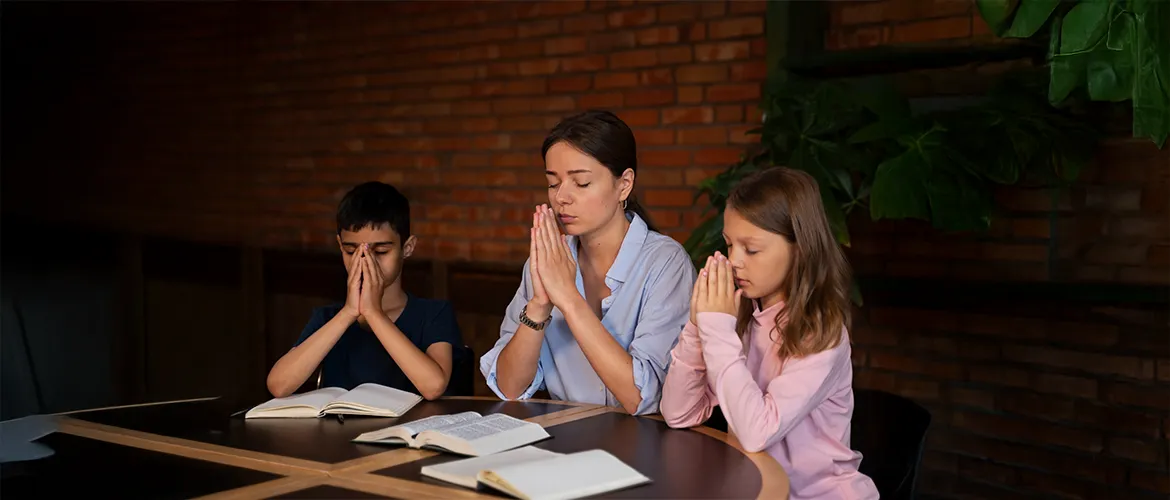
If you’ve ever paused mid-sentence, wondering, “Am I explaining this right?” — you’re not alone.
For many parents, teaching children about God feels deeply important… and slightly intimidating. We don’t want to confuse them. We don’t want to scare them. And we definitely don’t want to turn faith into a lecture that they tune out.
The good news?
Kids don’t need perfect explanations. They need honesty, warmth, and space to wonder.
Let’s talk about how to introduce God in ways that feel loving, simple, and natural — the kind that fits into everyday life.
Start With Curiosity, Not Instruction
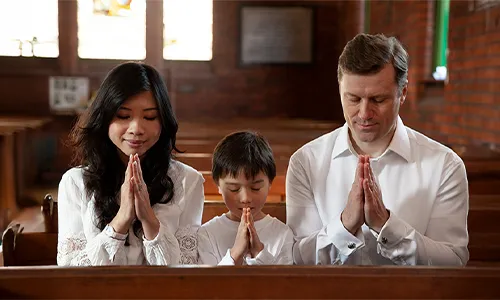
Children are natural philosophers. They ask big questions at inconvenient times.
“Who made the sky?”
“Where is God?”
“Does God sleep?”
Instead of rushing to give the right answer, try responding with curiosity.
“What do you think?”
“That’s a beautiful question.”
This tells your child that faith is something to explore, not memorize.
Use Everyday Moments As Teaching Moments

You don’t need a special setup to talk about God.
Some of the best conversations happen:
- While watching a sunset
- During bedtime routines
- After helping someone in need
- When a pet gets sick or passes away
Moments like these naturally open the door to talking about love, gratitude, kindness, and hope — all of which are central when teaching children about God.
Keep Stories Simple and Relatable
Kids connect deeply with stories — especially ones they can imagine themselves in.
Instead of long explanations, share:
- Short stories with clear values
- Age-appropriate religious stories
- Everyday examples of kindness and forgiveness
The goal isn’t to overwhelm them with details, but to help them understand the heart behind the message.
Focus on Love Before Rules
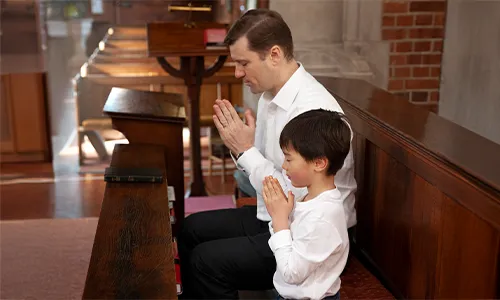
Children learn who God is by watching how we treat others.
When faith is introduced as:
- Love instead of fear
- Compassion instead of punishment
- Guidance instead of control
It becomes comforting, not confusing.
When teaching children about God, emphasizing love helps them associate faith with safety and warmth.
Encourage Questions (Even the Tricky Ones)

At some point, your child may ask questions you don’t have answers to.
That’s okay.
It’s perfectly fine to say: “I’m not sure, but we can think about it together.”
Faith grows through conversation, not certainty. Let your child know that questioning is not wrong — it’s part of learning.
Model Faith Through Actions

Children learn more from what we do than what we say.
They notice when you:
- Say thank you
- Show patience
- Apologize when wrong
- Help others without expecting anything back
These small acts speak volumes and quietly shape how children understand God.
Let Faith Grow At Its Own Pace
Every child is different. Some children are deeply curious early on. Others take time. And that’s okay. Faith is not a race or a checklist. When teaching children about God, patience is just as important as guidance. Trust the process. Trust your child.
Teaching children about God doesn’t require perfect words or deep theological knowledge.
It simply requires presence, honesty, and love. When children feel safe asking questions and sharing thoughts, faith becomes a gentle companion — not a heavy lesson. And that’s a beautiful place to begin.
FAQs
At what age should children learn about God?
There’s no fixed age. Children naturally begin asking spiritual questions as toddlers.
What if my child gets confused?
Confusion is normal. Keep explanations simple and age-appropriate.
Should I introduce God even if my child isn’t curious yet?
Yes, gently — through actions, stories, and values rather than lectures.
What if parents have different beliefs?
Focus on shared values like kindness, respect, and compassion.
Is it okay if my child questions faith?
Absolutely. Questions help children form a genuine understanding.