A few years ago, dinner at our house always ended the same way.
The kids would disappear.
One would suddenly need the bathroom.
Another would remember an “important” toy upstairs.
And somehow, the kitchen looked like a tiny tornado had passed through while the adults handled everything.
One evening, I jokingly said,
“Funny how everyone helps make the mess but nobody helps clean it.”
My youngest looked genuinely surprised.
“We can help?”
And honestly?
That moment changed our evenings.
Because children often want to help. They just don’t know how.
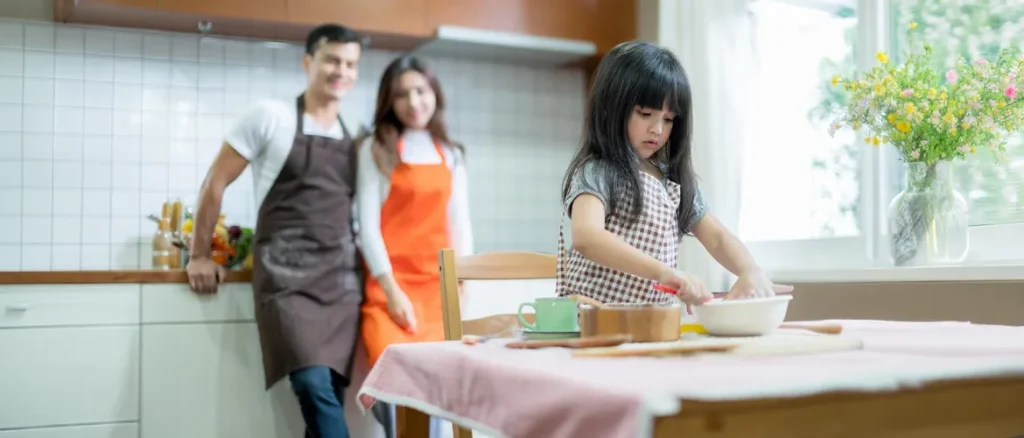
That’s why introducing ‘basic after-dinner chores for young children’ can be one of the easiest ways to teach responsibility, teamwork, and independence without making it feel like work.
Basic after-dinner chores for young children include clearing plates, wiping tables, collecting napkins, pushing in chairs, sorting recycling, feeding pets, and helping prepare for the next day. These simple tasks teach responsibility, teamwork, and independence while helping children contribute to family routines.
What Are Basic After-Dinner Chores for Young Children?
Basic after-dinner chores for young children are simple household tasks that help kids contribute to family routines. These chores may include clearing their plate, wiping the table, collecting napkins, sorting recycling, feeding pets, or organizing items for the next day. The goal is not perfection but helping children develop responsibility, confidence, and teamwork through small daily habits.
Why Introduce After-Dinner Chores?
Children learn through repetition.
The small habits they practice today often become the life skills they carry into adulthood.
Simple chores can help children:
- build confidence
- develop responsibility
- learn teamwork
- understand household routines
- feel like valuable family contributors
Most importantly, chores teach children that a home works best when everyone participates.
1. Clear Their Own Plate
This is often the perfect first chore.
Even toddlers can carry lightweight plastic plates to the sink with supervision.
For slightly older children:
- scrape leftovers into the trash
- place dishes near the sink
- load dishes into the dishwasher
This simple task teaches accountability from an early age.
2. Wipe the Dining Table
Children love seeing immediate results.
Give them a child-safe cloth and let them wipe crumbs and spills.
You may need to go over it afterward at first.
That’s okay.
The goal isn’t perfection.
The goal is participation.
3. Push in Chairs
This might sound tiny.
But small responsibilities matter.
Pushing in chairs teaches children to notice their surroundings and leave shared spaces tidy for the next person.
4. Collect Napkins and Placemats
Young children enjoy jobs that involve gathering items.
Ask them to:
- collect napkins
- stack placemats
- return table accessories to their storage spot
It feels like a game while reinforcing organizational skills.
5. Help Sort Recycling
Many children enjoy sorting activities.
Let them separate:
- plastic bottles
- cardboard packaging
- recyclable containers
This also practically introduces environmental awareness.
6. Feed Family Pets
If you have pets, after-dinner feeding can become a regular responsibility.
Children often take pride in caring for animals.
It helps them understand consistency and compassion.
7. Sweep Small Crumbs
A child-sized broom can make this task surprisingly exciting.
Focus on obvious crumbs around the dining area.
Children love visible accomplishments.
And sweeping definitely delivers that.
8. Pack Away Leftover Snacks
Did everyone enjoy fruit after dinner?
Maybe there are crackers left from a family gathering.
Children can help:
- close containers
- place items in the pantry
- organize snacks neatly
- This builds practical kitchen skills.
9. Water Indoor Plants
While not technically part of cleaning up dinner, it fits naturally into an evening routine.
Children enjoy caring for living things.
Just be sure to supervise younger kids so every plant doesn’t receive an entire watering can.
10. Prepare for Tomorrow
One of my favorite after-dinner habits involves setting up for the next day.
Children can:
- place lunch boxes in one spot
- organize school bags
- set out water bottles
- This helps reduce morning chaos.
And honestly, parents appreciate it just as much.
How to Make Chores Feel Fun Instead of Forced
If chores feel like punishment, children won’t enjoy them.
The trick is turning them into something positive.
Use a Timer Challenge
Set a five-minute timer.
Ask:
“How much can we finish before the timer rings?”
Children often become surprisingly motivated.
Play Music
Everything feels easier with music.
Turn on a favorite family playlist and make cleanup part of the fun.
Create a Chore Rotation
Children enjoy variety.
Rotating responsibilities prevents boredom and gives everyone a chance to learn different skills.
Celebrate Effort
This one matters most.
Instead of saying:
“You missed a spot.”
Try:
“Thank you for helping.”
Children respond better to encouragement than criticism.
Chores by Age Group
Ages 2–4
- carry napkins
- place utensils in a container
- push in chairs
- help wipe easy spills
Ages 5–7
- clear plates
- sort recycling
- sweep crumbs
- organize placemats
Ages 8+
Every child develops differently, so adjust responsibilities accordingly.
Common Mistakes Parents Make When Assigning Chores
Sometimes parents unintentionally make chores feel overwhelming.
Common mistakes include:
- Expecting perfection immediately
- Assigning tasks that are too difficult
- Using chores as punishment
- Comparing siblings
- Forgetting to praise effort
Children are more likely to help when chores are presented as a normal part of family life rather than a consequence for bad behavior.
Skills Children Learn Through Simple Chores
While chores help keep the house organized, they also teach valuable life skills.
Children who regularly participate in household tasks often develop:
- Problem-solving abilities
- Time management skills
- Responsibility
- Independence
- Communication skills
- Teamwork
- Self-confidence
These lessons often extend beyond the home and help children become more capable in school, friendships, and future workplaces.
The Hidden Benefits Parents Often Miss
The biggest benefit isn’t a cleaner kitchen.
It’s a family connection.
When families clean up together, conversations happen naturally.
Children share school stories.
Parents hear things they might otherwise miss.
The task becomes secondary.
The relationship becomes stronger.
FAQs
What are basic after dinner chores for young children?
Simple chores include clearing plates, wiping tables, collecting napkins, sorting recycling, and pushing in chairs.
At what age should children start helping with chores?
Many children can begin simple supervised chores between ages 2 and 3, with responsibilities increasing as they grow.
How do I motivate my child to do chores?
Make chores fun through music, games, positive reinforcement, and age-appropriate responsibilities.
Why are chores important for young children?
Chores help children develop responsibility, confidence, independence, teamwork, and valuable life skills.
Okay, Back to My Family…
That first night, the kids weren’t exactly helpful.
One plate almost hit the floor.
Someone wiped the same spot of the table for three minutes.
And a handful of crumbs somehow ended up in a bigger pile than before.
But we laughed.
And the next night got easier.
Then the night after that.
Today, helping after dinner is simply part of what we do.
Not because anyone loves chores.
But because everyone understands they’re part of the team.
Teaching Basic After-Dinner Chores for Young Children isn’t really about keeping the house clean. It’s about helping children develop responsibility, confidence, and independence one small task at a time.
Years from now, they probably won’t remember who wiped the table.
But they may remember what it felt like to contribute.
To help.
To belong.
And sometimes, those little evening routines end up teaching the biggest life lessons.