Childproofing the House: A Realistic Guide for Tired Parents
Elena
Can we just skip the perfect parenting handbook talk for a second? Before I had my first child, I had this beautifully curated living room. Sleek glass coffee table, minimalist aesthetic, beautiful indoor plants sitting casually on low shelves. Then, my little guy learned how to roll, drag his body across the floor, and eventually pull himself up. Within forty-eight hours, that glass table became a ticking clock, and my plants were thoroughly tasted.I learned the hard way that childproofing the house isn’t something you do just to check a box on a parenting list. It is a full-blown survival strategy.When your tiny human suddenly gains mobility, your home transforms from a peaceful sanctuary into an obstacle course of hidden hazards. But don’t panic—you don’t have to wrap every single wall in bubble wrap or move into a padded cell. Let’s break down how to handle childproofing the house room-by-room without losing your mind or your style.Childproofing the house means removing or securing everyday hazards before your baby starts crawling, climbing, or pulling up on furniture. Start with outlets, sharp corners, heavy furniture, cabinet locks, bathroom safety, and kitchen hazards to create a safer space without making your home feel uncomfortable.
The 5-Minute Checklist for Childproofing the House
The easiest way to start is by changing your perspective—literally. If you want to know what is dangerous, you have to get down on your hands and knees and look at your home from eye level. You will be shocked by what you notice down there.Here is your quick-start guide to making the major spaces secure:
1. The Living Room (The Danger Zone)
The Sharp Corners: Low coffee tables and TV stands are at the exact height of a falling toddler’s forehead. Use soft foam corner guards to blunt those edges.
The Heavy Stuff: This is the big one that people miss. Anchor your heavy bookshelves, dressers, and TVs to the wall using L-brackets. If a toddler pulls out the bottom drawers to use them as stairs, a heavy dresser can tip over in a second.
The Outlets: Keep plastic socket covers firmly pressed into every open electrical outlet.
2. The Kitchen (The Lock-Down Area)
Lower Cabinets: Move all of your harsh cleaning chemicals, dishwasher pods, and heavy pots to upper cabinets. For the lower cabinets, install magnetic or flexible plastic latches.
The Stove: Always cook on the back burners when possible, and turn your pot handles backward so little hands can’t reach up and grab them.
The Toilet Lock: It sounds funny until your child decides to go fishing in the bowl or uses it as a water slide for your car keys. A simple lid lock saves you a lot of grief.
Water Temperature: Set your water heater to less than 120 degrees Fahrenheit to prevent accidental scalding during bath time.
4. The Bedroom and Nursery
The Crib: Keep pillows, loose blankets, stuffed toys, and bumpers out of the crib. A firm mattress with a fitted sheet is the safest setup for sleep.The Cords: Keep baby monitor cords, blind cords, and charger wires far away from the crib or changing table. If your child can reach it, they can pull it.The Dresser: Anchor dressers and changing tables to the wall, even if they feel heavy. Toddlers love climbing drawers, and furniture can tip faster than you expect.
5. Stairs, Doors, and Entryways
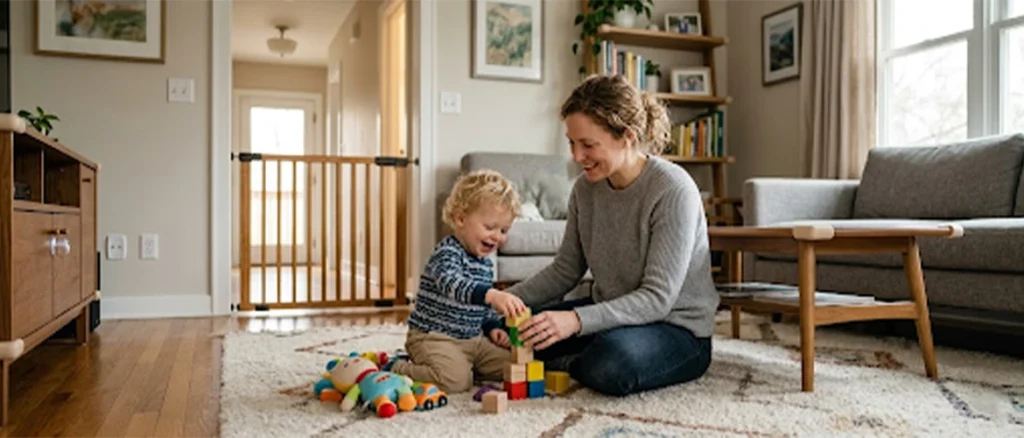
Safety Gates: Install baby gates at the top and bottom of stairs. For the top of stairs, use hardware-mounted gates instead of pressure-mounted ones.Door Stops: Use door pinch guards to protect tiny fingers from getting caught.Front Door Safety: Add a high latch or door alarm if your toddler has started reaching handles. It only takes a few seconds for a curious child to wander.
Frequently Asked Questions
When should I start childproofing the house?
Start childproofing before your baby begins crawling, usually around 5 to 6 months. It is better to prepare early than to rush once your baby becomes mobile.
What is the first thing to childproof?
Start with the biggest risks: electrical outlets, sharp furniture corners, heavy furniture, cleaning supplies, stairs, and bathroom water hazards.
Do I need to childproof every room?
Focus first on the rooms your child uses most often, such as the living room, kitchen, bathroom, nursery, and hallway areas. You can block off rooms that are not safe or not used daily.
Are baby gates really necessary?
Yes, especially if your home has stairs. Baby gates help prevent falls and keep children away from unsafe areas like kitchens, bathrooms, or laundry rooms.
How can I childproof without ruining my home decor?
Choose clear corner guards, hidden cabinet locks, neutral-colored baby gates, and furniture anchors that stay out of sight. Childproofing can be safe without making your home look cluttered.
Why “Proactive” Beats “Reactive” Every Single Time
Pro Tip from Experience: Do not wait until your baby is actively crawling to buy your safety gates and cabinet latches. Order them a month early. Why? Because kids do not give you a two-week notice before they figure out how to scurry across the carpet.One day they are sitting completely still, and the next day they are making a break for the dog bowl. By setting up your safety parameters early, you avoid that week of pure panic where you have to chase them every single second.Childproofing your environment isn’t about crushing your child’s natural curiosity. It’s actually the exact opposite! By securing the major hazards, you create a safe zone where they are free to explore, learn, and grow, and you finally get a chance to sit back and drink your coffee while it’s actually hot.