


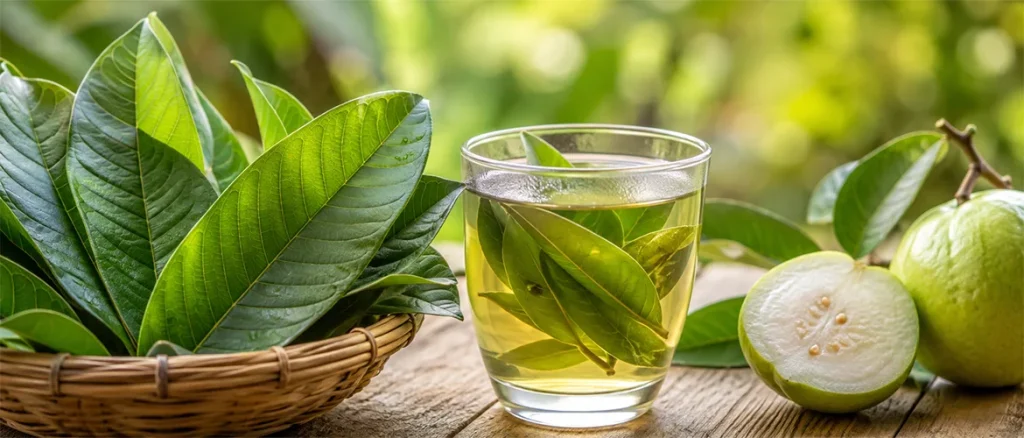
Why Are Guava Leaves Suddenly Getting So Much Attention?
Guava is already known for its nutritious fruit. The leaves are less famous, but they’re packed with plant compounds such as quercetin, catechins, gallic acid, and chlorogenic acid. Researchers have studied guava leaf extracts for antioxidant, blood-sugar, digestive, antimicrobial, and other effects. However, much of the evidence still comes from laboratory and animal research, so not every claim you see online has been proven in humans.What Can Guava Leaves Actually Do for Your Health?
Here’s where the research gets interesting.They May Help with Blood Sugar After Meals
Guava leaf preparations have been studied for their potential to slow carbohydrate digestion and reduce the rise in blood glucose after eating. Some clinical research has reported encouraging effects, although guava leaves should never replace prescribed diabetes treatment. If you’re watching your blood sugar, an unsweetened herbal tea can also be a sensible alternative to sugary drinks.Your Digestive System May Benefit Too
Guava leaves have a long history of traditional use for stomach discomfort and diarrhea. Researchers have identified compounds in the leaves that may contribute to antidiarrheal and antimicrobial effects. Clinical research is promising, but researchers still say more studies are needed to establish the right preparation, dosage and safety. For severe or persistent diarrhea, though, don’t rely on herbal tea. Hydration and medical care come first.There May Be a Role in Menstrual Comfort
A randomized clinical trial found that a standardized guava leaf extract reduced menstrual pain at one tested dose in women with primary dysmenorrhea. The important detail is that the study used a standardized extract, not homemade tea. So we can’t assume that a cup of guava leaf tea will have the same effect.What About Your Heart, Immunity and Inflammation?
Guava leaves contain several antioxidant and anti-inflammatory compounds, which is why researchers are investigating their potential effects on cardiovascular and metabolic health. You may also see claims that guava leaves:- Boost immunity
- Support heart health
- Protect the kidneys
- Strengthen bones
- Improve eye health
- Support healthy skin and hair
- Reduce stress
- Help with “detoxification”
Can Guava Leaves Really Help You Lose Weight?
Don’t expect guava leaves to burn body fat. Researchers have investigated guava leaves for blood sugar, fat metabolism and obesity-related pathways, but there isn’t enough high-quality human evidence to call guava leaf tea a weight-loss treatment. There is, however, a practical way to use it. If you normally reach for: Sweetened tea → guava leaf tea or Sugary iced drink → unsweetened guava iced tea That’s much more realistic than expecting a herbal drink to melt away belly fat. And honestly, that’s the kind of change that works better in real life anyway.How Do You Make Guava Leaf Tea at Home?
Simple Guava Leaf Tea
Ingredients- 4–5 clean guava leaves
- 2 cups water
- Lemon, optional
- Wash the leaves thoroughly.
- Add them to the water.
- Simmer for several minutes.
- Strain into a cup.
- Let it cool slightly.
- Add lemon if you enjoy the taste.
How Could You Fit Guava Leaves Into Your Everyday Routine?
Don’t turn this into another complicated wellness habit. You could simply:- Drink a small cup occasionally.
- Use it instead of sugary beverages.
- Prepare iced guava tea for hot afternoons.
- Keep the preparation mild rather than making highly concentrated brews.
Are Guava Leaves Safe for Everyone?
Guava leaves have been studied in various preparations, but safety depends on the amount, preparation and individual health situation. Long-term, high-dose use isn’t well established. Be especially careful with concentrated extracts or supplements if you:- Are pregnant or breastfeeding
- Take diabetes medication
- Take blood-pressure medication
- Have kidney or liver problems
- Take several prescription medicines
- Have a plant allergy
Do Guava Leaf Supplements Work Better than Tea?
You can find guava leaves as:| Form | What to know |
| Fresh leaves | Simple, but strength varies |
| Tea bags | Convenient and easy to prepare |
| Dried leaves | Easy to store |
| Powder | More concentrated than tea |
| Capsules | Convenient but dosage varies |
| Extracts | Often much more concentrated |
What Does the Science Really Say?
The research on guava leaves is promising, but still developing. Reviews have identified a wide range of compounds in the leaves and reported antioxidant, antidiabetic, antidiarrheal, antimicrobial, anti-inflammatory and potential anticancer activity. There’s a big difference between something working in a lab and it actually working in your body. That’s why claims about cancer prevention, kidney cleansing, stronger bones, better eyesight, immunity, pregnancy and detoxification should be treated cautiously.What About Nutrition?
Fresh guava leaves contain various minerals, vitamins and plant compounds, but homemade guava leaf tea doesn’t have one fixed nutritional profile. The amount extracted into your cup depends on:- The number of leaves
- Leaf maturity
- Fresh versus dried leaves
- Brewing time
- Water volume
- Preparation method