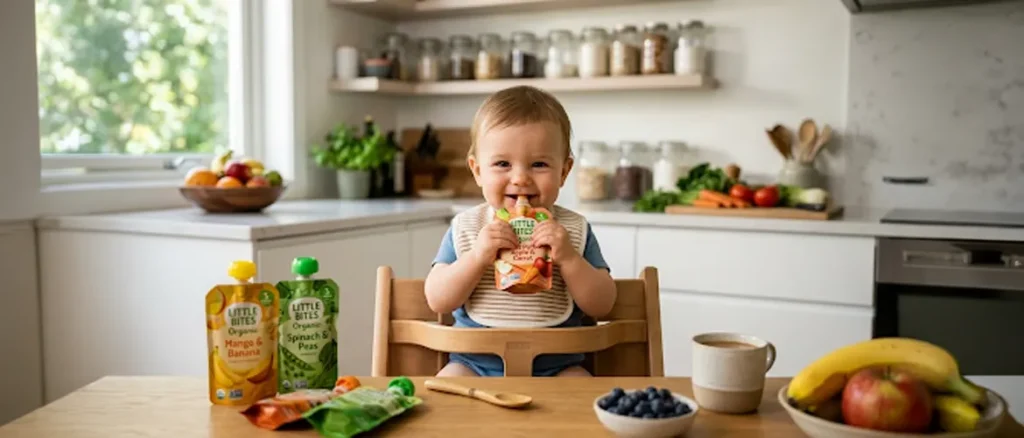
Are Baby Food Pouches Healthy or Harmful? The Honest Truth
Kiara
There are a million different brands, colorful packaging, and bold claims staring back at you. If you are like most of us trying to survive the morning rush, daycare drop-offs, and endless laundry piles, you’ve probably grabbed your fair share of baby food pouches. They are lightweight, completely mess-free, and let’s face it—a total sanity-saver when you are out and about.But if you’ve been scrolling through social media or reading recent health reports lately, you might be feeling a massive wave of mom-guilt. I took a closer look at the actual nutrition panel, talked to a few pediatric experts, and realized the truth is a bit more complicated. If you’ve been wondering whether these convenient squeezes are a blessing or a disguised curse, you are not alone. Let’s dive into the real, raw honest truth about what we are actually feeding our little ones.Baby food pouches can be a convenient option for busy parents, but they should not replace a balanced diet of whole foods. While they offer portability and convenience, some pouches may contain high levels of fruit-based sugars and lack important nutrients needed for healthy growth and development.
Are Baby Food Pouches Healthy for Babies? Let’s Read the Labels
When you look at the front of a pouch, you see gorgeous pictures of organic kale, quinoa, and grass-fed beef. But when you flip it over to check the back, a completely different story unfolds.Recent independent nutritional audits of commercial baby food pouches revealed a massive gap between marketing claims and actual health realities. The truth is that many store-bought options are fundamentally imbalanced for a growing baby’s needs.Here is what the science actually says about what is hiding inside:
The Hidden “Free Sugars” Trap: Even if a label proudly screams “No Added Sugar,” it is often packed with fruit juice concentrates or heavy apple and pear purees. When fruit is industrially blasted into an ultra-smooth liquid, its cellular walls break down completely. This turns natural fruit sugars into “free sugars,” which hit your baby’s bloodstream rapidly, causing sharp insulin spikes and cultivating an intense, lifelong preference for hyper-sweet foods.
The Ultra-High Heat Problem: To make these packs shelf-stable for months (or years!), manufacturers cook the purees at extreme, ultra-high temperatures before sealing them. While this kills off all bacteria, it also can reduce the levels of certain heat-sensitive nutrients during processing (like Vitamin C), healthy fats, and natural enzymes.
The Missing Macronutrients: Growing infants between 6 to 24 months require high amounts of dietary iron, zinc, and healthy fats for rapid brain development. Because mass-market pouches rely on cheap, water-heavy fruit fillers to keep costs low, they are consistently deficient in real protein and iron.
The Ultimate Pros and Cons of Baby Food Pouches
To help you make the best, stress-free choice next time you are restocking your kitchen pantry, let’s lay all the cards on the table.
The Pros: Why We Love Them
Unmatched Portability: They fit seamlessly into a diaper bag, won’t shatter like glass jars, and don’t require ice packs when you’re traveling.
Independent Feeding Support: Older infants love the autonomy of gripping the pack themselves, which helps build their basic confidence with food.
Sanity-Saving Backup: On chaotic days when home cooking completely falls apart, they provide an immediate, hygienically safe meal solution.
The Cons: The Hidden Drawbacks
Delayed Chewing Skills: Sucking pureed liquid through a plastic spout uses an immature front-to-back tongue movement. It completely bypasses the lateral tongue motion and strong jaw movements required to learn how to masticate (chew and grind) real food. Relying on them too heavily past 8 months can severely delay your baby’s transition to table textures.
Increased Risk of Cavities: Sucking sweet fruit puree directly from a spout bathes emerging baby teeth in concentrated acids and free sugars for prolonged periods, spiking early tooth decay risks.
The Flavor Uniformity Trap: Because so many blends are secretly anchored by cheap applesauce, a “Beef and Spinach” blend often tastes almost identical to a “Sweet Potato and Turkey” blend. Your baby misses out on experiencing distinct bitter, savory, and complex textures.
Smart Tips: How to Balance Convenience and Healthy Development
You don’t have to throw your entire stash of baby food pouches into the trash! Instead, you just need to change how and when you serve them. Think of them as a helpful tool rather than a dietary staple.Use these professional feeding strategies to keep things perfectly balanced:
Ditch the Spout (Pour it Out): Whenever you are at home, squeeze the contents directly into a small bowl and feed it with a soft spoon. This forces your baby to clear the food off the spoon using their upper lip, which exercises critical oral-motor muscles used for future speech development.
Beef Up the Nutrition: Use the puree as a base and mix in powerful, nutrient-dense ingredients from your own kitchen. Stir in a tablespoon of full-fat Greek yogurt for healthy fats, or fold in a teaspoon of ground flax seeds or chia seeds to load it up with iron and brain-boosting Omega-3s.
The “Front vs. Back” Ingredient Rule: Never trust the front of the packaging. Flip it over and look at the first three ingredients. If a savory dinner pouch lists apple or pear before the actual meat or vegetable, put it back on the shelf and look for a truly savory option.
Frequently Asked Questions About Baby Food Pouches
1. Are baby food pouches healthy or harmful for a baby’s teeth?
They can be harmful if babies suck directly from the spout for long periods. Doing this bathes their front teeth in concentrated fruit sugars and acids, which increases the risk of early childhood tooth decay. Serving the puree from a spoon or bowl completely avoids this issue!
2. Do baby food pouches cause speech or chewing delays?
Relying on them too heavily past 8 or 9 months can delay development. Sucking from a pouch uses a basic front-to-back tongue motion, while learning to eat real food requires complex side-to-side tongue movements and jaw strength. Pair your baby food pouches with soft finger foods to keep their oral motor skills on track.
3. Can baby food pouches make my child a picky eater?
Yes, if used too often. Because mass-market options are cooked at ultra-high temperatures and heavily blended with sweet apple or pear purees, they all tend to taste uniformly sweet. This can trap your baby in a “sweet preference cycle,” making it harder for them to accept bitter, savory, or lumpy table foods later on.
4. What should I look for on the ingredient list when buying pouches?
Flip the pack over and check the first three ingredients. You want to see the actual hero ingredient (like spinach, beef, or lentils) listed first—not apple juice concentrate or pear puree. Also, look for options that explicitly state they contain healthy fats, iron, or zinc.
5. Are reusable baby food pouches better than store-bought ones?
Absolutely! Reusable baby food pouches are a fantastic, eco-friendly alternative. They allow you to blend your own nutrient-dense family meals (like iron-rich meats or full-fat Greek yogurt) at home, control the exact texture, and save a ton of money while still enjoying the mess-free convenience.
6. Can my baby eat a pouch straight from the fridge?
Yes, it is entirely safe to serve them cold or at room temperature! If your baby prefers a warm meal, never put the plastic pouch in the microwave. Instead, place the sealed pouch into a bowl of warm water for a few minutes, or squeeze the contents into a microwave-safe bowl before heating.
7. How long can an opened baby food pouch stay in the fridge?
If your baby is fed directly from the spout, discard the leftovers within 24 hours because bacteria from their saliva can grow quickly inside the pack. If you squeeze the food onto a clean spoon or bowl without touching the spout, the leftover pouch can be safely capped and refrigerated for up to 48 hours.
8. How many baby food pouches can my baby have a day?
Think of them as a convenient backup or snack rather than a core meal. A good rule of thumb is that many pediatric feeding experts recommend using baby food pouches as a supplement to a varied diet rather than relying on them as the primary source of daily meals. to no more than one per day. Ensure the rest of their meals consist of whole foods that allow them to practice touching, smelling, and actively chewing different textures.
9. Are homemade baby food pouches healthier?
Homemade baby food pouches can offer greater control over ingredients, texture, and nutrition. Parents can include more vegetables, healthy fats, and proteins while avoiding excess fruit-based sugars.
The Bottom Line
At the end of the day, parenting is all about balance, not perfection. There is absolutely no shame in using a baby food pouch to get through a chaotic afternoon or a long road trip. Don’t let the internet guilt you into thinking otherwise! By mixing in real, whole textures when you’re at home and using these little squeeze packs as your trusty sidekick rather than the main event, you’re setting your baby up for a healthy, happy relationship with food.
Parenting Disclaimer
This article is for informational purposes only and should not replace advice from your pediatrician or healthcare provider. Every child has unique nutritional needs, and feeding decisions should be based on age, development, and individual health requirements.