


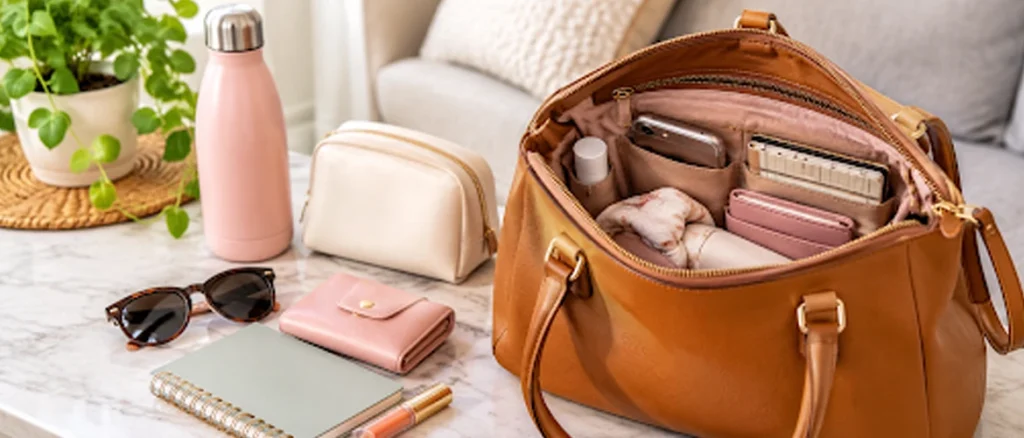
Why Does Your Bag Get Messy So Quickly?
Your bag probably isn’t messy because you’re careless. It’s messy because you use it for several parts of your day. One minute, you’re carrying your wallet and phone. Later, you add a snack, a shopping receipt, a hair clip, a charger, and something you picked up for a family member. Before you know it, everything is sharing one crowded compartment. A few common habits make this worse:- No designated spots: You put things wherever there’s room instead of returning them to the same place.
- Too many unnecessary items: Old receipts, empty wrappers, and products you rarely use take up valuable space.
- Small items get buried: Keys, earbuds, coins, and lip products disappear beneath larger belongings.
- You switch bags frequently: Essentials get left behind or transferred without checking what you actually need.
- You rarely reset your bag: Small amounts of clutter accumulate until finding anything becomes frustrating.
How to Organize a Bag Without an Organizer Using Everyday Items
You probably already have everything you need at home. Before buying anything, look for small containers, fabric pouches, and reusable bags that can give your belongings a designated place. Here are practical ways to get started.1. Empty Your Bag and Sort Everything First
Start by taking everything out of your bag. Yes, everything, including the little items hiding in the side pockets. Spread your belongings across a table or bed so you can see what you’re carrying. Divide everything into four groups:- Daily essentials: Phone, wallet, keys, tissues, and frequently used personal items.
- Occasional essentials: Sunglasses, a small notebook, a charger, or items you need only on certain days.
- Unnecessary clutter: Old receipts, wrappers, empty packaging, and expired products.
- Items that belong elsewhere: Things that should be returned to your desk, bedroom, car, or kitchen.
2. Use Small Pouches You Already Own
One of the easiest ways to keep your belongings together is to reuse small pouches from things you already have. Think about the little fabric bags, cosmetic pouches, and zippered cases sitting in your drawers. You can use them to group similar items without purchasing a dedicated organizer. For example:- Beauty pouch: Lip balm, compact mirror, hand cream, and a hair tie.
- Tech pouch: Earbuds, charging cable, and a small power bank.
- Personal essentials pouch: Tissues, sanitary products, and other personal necessities.
- Medication pouch: Necessary medication in its original packaging, stored appropriately.
3. Create Storage Zones Inside Your Bag
You don’t need built-in compartments to give everything a home. Think of your bag as having a few simple zones.- The quick-access zone: Keep your phone, keys, and frequently used items near the top or in an easy-to-reach pocket.
- The secure zone: Use an interior zip pocket for cash, important cards, and other small valuables.
- The everyday essentials zone: Keep your wallet, tissues, and other regular belongings in the main compartment where you can reach them easily.
- The occasional-use zone: Place sunglasses, a notebook, or less frequently used items in a separate section or pouch.
4. Reuse a Small Fabric Bag for Loose Items
Loose objects are often responsible for the most frustrating bag clutter. Coins, hairpins, spare buttons, earbuds, and small accessories can easily disappear into the bottom of your bag. A small fabric drawstring bag or an unused zippered pouch can keep these items together. You can also reuse a clean, sturdy gift pouch if it is suitable for the items you’re storing. A few things to remember:- Choose a pouch that fits comfortably inside your bag.
- Avoid filling it with items you rarely use.
- Keep sharp objects separate from delicate belongings.
- Don’t use flimsy packaging that can open or spill easily.
5. Use Your Existing Pockets More Intentionally
Sometimes the solution is already built into your bag. Look at the interior and exterior pockets you tend to ignore. An interior zip pocket can hold small valuables. An exterior pocket may be useful for a transit card or another item you need frequently, provided it is secure. Try assigning one purpose to each pocket instead of using them randomly. For example:- Front pocket: Frequently used small essentials.
- Interior zip pocket: Important cards or cash.
- Side pocket: A compact item you reach for regularly.
- Main compartment: Wallet, pouch, notebook, and other everyday belongings.
6. Keep Reusable Bags Folded and Together
If you regularly carry shopping bags, a reusable tote, or an extra fabric bag, don’t let them take over your main compartment. Fold one compact reusable bag neatly and place it inside a small pouch or an existing pocket. You can also keep it near the bottom of your bag if you don’t need it frequently. This prevents loose bags from spreading throughout the compartment and taking up unnecessary space. Just carry the number you realistically need instead of keeping several extras in your handbag.7. Keep Bulky Items From Taking Over
Large items can make a small bag feel crowded very quickly. Water bottles, notebooks, sunglasses cases, and bulky wallets can push smaller essentials into awkward corners. Try these simple adjustments:- Choose a slimmer wallet if your current one takes up too much space.
- Carry only the notebook you actually need.
- Use a compact sunglasses case that protects your glasses without adding unnecessary bulk.
- Keep heavier belongings toward the bottom of the bag.
- Avoid carrying multiple versions of the same item.
What Can You Use Instead of a Bag Organizer?
If you don’t want to purchase an organizer, ordinary household items can work surprisingly well.| Everyday alternative | What you can use it for |
| Small cosmetic pouch | Makeup and personal care items |
| Fabric drawstring bag | Hair accessories and loose essentials |
| Reusable zippered pouch | Chargers and earbuds |
| Small gift pouch | Coins and small accessories |
| Folded reusable shopping bag | Extra shopping or errands |
| Existing zip pocket | Cash, cards, and valuables |
A Simple Bag Organization Routine You Can Actually Maintain
If you’re short on time, you don’t need to follow every tip at once. Start with this simple routine:- Every day: Return your keys, wallet, and phone to their usual places.
- Twice a week: Remove receipts, wrappers, and unnecessary items.
- Once a week: Check your pouches, refill essentials, and remove anything you haven’t used.
- Whenever you switch bags: Transfer only the items you need.