


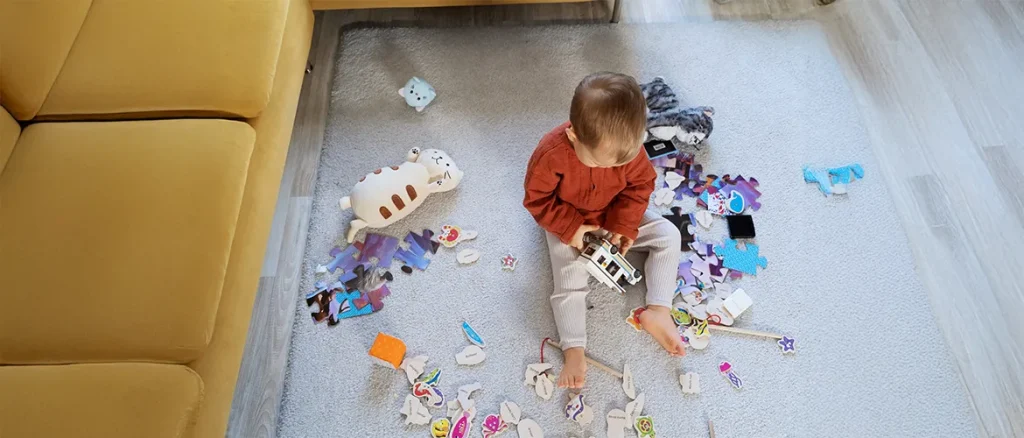
1. Rotate Toys Instead of Adding More
Too many toys can overwhelm toddlers and shorten attention spans. Try keeping only a few toys out at a time and rotating them every few days. Old toys suddenly feel new again, and your toddler stays engaged longer without you spending extra money.2. Let Them Get “Messy on Purpose”
Toddlers love activities that involve their hands. Simple ideas include:- Scribbling with crayons
- Playing with stickers
- Sorting dry pasta or beans (with supervision)
- Finger painting with washable colors
3. Involve Them in Everyday Chores
Toddlers love feeling helpful. Let them:- Hand you laundry clips
- Wipe surfaces with a cloth
- Help put vegetables in a bowl
- Match socks
4. Create a Cozy Reading Corner
Books don’t always need to be read cover to cover. Toddlers enjoy flipping pages, pointing at pictures, and naming objects. Keep a small basket of books within reach and change them weekly to keep interest alive.5. Use Music and Movement
Music is a great way to burn energy while keeping things fun.- Action songs
- Dancing together
- Simple freeze games
- Clapping or marching rhythms
6. Offer Open-Ended Play
Open-ended toys allow toddlers to use their imagination instead of following rules. Examples include:- Building blocks
- Stacking cups
- Play dough
- Simple puzzles
7. Go Outside Whenever Possible
Fresh air works wonders. A short walk, playing with leaves, watching birds, or just running around in a safe space can reset a restless toddler’s mood and energy. Outdoor play often leads to better naps and calmer behavior later.8. Follow Their Natural Rhythm
Toddlers get bored faster when they’re hungry, tired, or overstimulated.- When they’re most active
- When they need quiet time
- When they lose focus
Age-Wise Activity Ideas to Keep Your Toddler Busy
| Toddler Age | Activity Ideas | Why It Works |
| 12–18 months | Stacking cups, soft blocks, musical toys | Builds coordination and keeps short attention spans engaged |
| 18–24 months | Scribbling with crayons, simple puzzles, sorting toys | Encourages creativity and problem-solving |
| 2–2.5 years | Pretend play with kitchen sets, dolls, toy cars | Supports imagination and role-play skills |
| 2.5–3 years | Matching games, shape sorters, and helping with chores | Improves focus and builds independence |
| 3+ years | Storytelling, basic crafts, and outdoor obstacle play | Enhances language skills and physical confidence |